
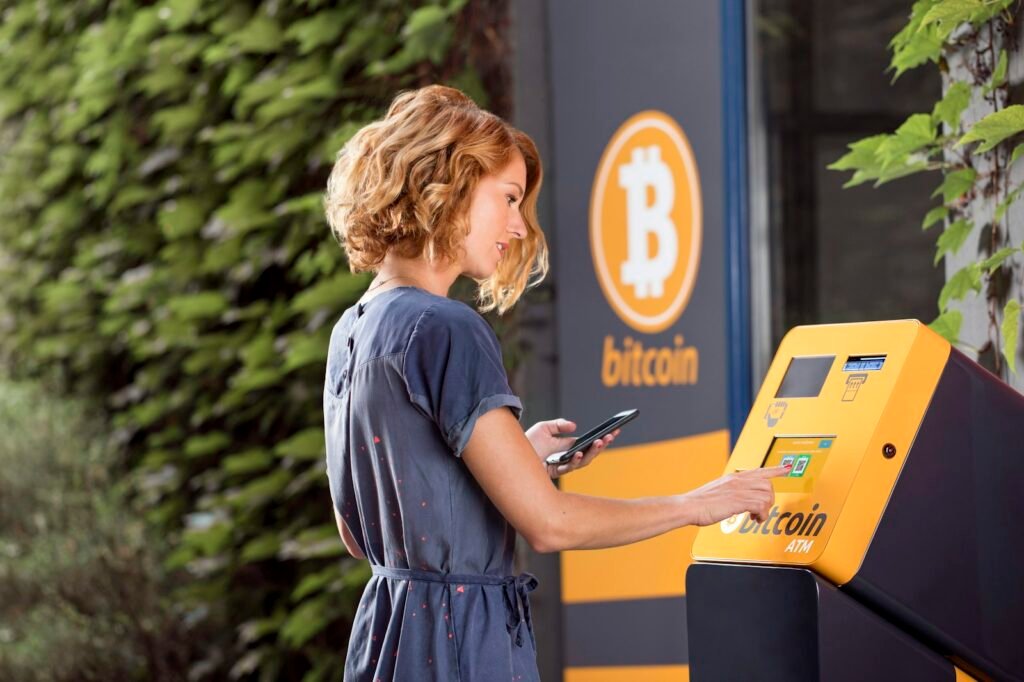
AARA is taking action. On June 29, 2026, the Asian American Retailers Association formally wrote to members of the New Jersey Senate urging them to oppose S2141, a bill that would impose a complete statewide ban on cryptocurrency ATMs. We share the Legislature’s goal of stopping fraud, but a blanket prohibition goes far beyond bad actors and would penalize law-abiding convenience stores, gas stations, and neighborhood retailers that simply host these machines.
What S2141 actually does
S2141 would make it unlawful for any business to own, control, install, manage, sell, or offer for sale a cryptocurrency ATM anywhere in New Jersey. Violations would be treated as an unlawful practice under the state’s Consumer Fraud Act, carrying penalties of up to $10,000 for a first offense and up to $20,000 for each subsequent offense, plus possible cease-and-desist orders and treble (triple) damages. If enacted, New Jersey would become the fourth state to ban crypto ATMs outright, after Indiana, Tennessee, and Minnesota.
The ban wave is accelerating. NJ is at a decision point
New Jersey is not debating this in a vacuum. A national wave of crypto-ATM legislation is moving fast in 2026, and states are splitting into two camps, outright bans versus targeted safeguards:
- Indiana became the first state to fully ban the machines, signed into law on March 9, 2026.
- Tennessee’s statewide ban (HB 2505, signed April 23) takes effect July 1, 2026, operators are removing kiosks now, making it the second full-ban state.
- Minnesota followed with its own ban in May, becoming the third.
- Delaware’s HB 441 cleared the House Economic Development Committee on June 10, 2026 and is headed to the floor, and North Carolina is advancing its own measure, so NJ is one of several states voting this summer.
Meanwhile, a federal bill, the Crypto ATM Fraud Prevention Act of 2025 (S.710), is pending in Congress, aimed at fraud safeguards rather than a nationwide ban. The direction NJ chooses now will help set the template other states follow.
Why a blanket ban is the wrong tool
The retailers who host these machines are generally not the owners or operators. The kiosks are run by licensed third-party vendors who control the transactions, customer accounts, identity verification, compliance programs, software, and anti-fraud monitoring. The store owner provides floor space and earns modest supplemental revenue, nothing more. Yet S2141 would put the host location on the hook for activity it has no ability to control.
AARA’s letter to senators laid out the core concerns with an outright ban:
- It penalizes responsible businesses that have done nothing wrong.
- It eliminates a lawful service that many consumers use.
- It removes a source of income for small retailers already facing rising costs and shrinking margins.
- It may push consumers toward less transparent or unregulated alternatives.
- It targets an entire industry instead of focusing enforcement on fraud and criminal actors.
- It places liability on host retailers who are not the owners or operators of the machines.
Fraud is real, but there’s a smarter fix
Supporters of the bill, including Consumer Reports and AARP, point to a sharp rise in scams. Nationally, the FBI logged more than 13,400 crypto-ATM fraud complaints in 2025, with losses exceeding $388 million, up 58% from the prior year, and the scams disproportionately target seniors. Those numbers are serious, and AARA does not dispute the need to protect consumers.
But fraud can be addressed without erasing a legal service. AARA supports targeted, balanced measures, such as:
- Stronger consumer disclosures and on-screen fraud warnings at the kiosk;
- Transaction and daily dollar limits, especially for new users;
- Operator registration and licensing requirements;
- Enhanced identity verification and anti-scam monitoring by operators; and
- Direct enforcement against the scammers and unlicensed operators causing the harm.
This isn’t hypothetical, several states have already chosen safeguards over prohibition. South Dakota, Wisconsin, Virginia, and New Hampshire enacted measures in 2026 that cap daily crypto-ATM transactions (often around $1,000) and require operators to refund fraud victims, rather than banning the machines outright. That is the balanced model AARA is urging New Jersey to adopt.
Even CoinFlip, the world’s largest crypto kiosk operator, which told the committee it serves roughly 23,000 customers in New Jersey, argued for regulation over prohibition: “We don’t think a ban is the way to do it.”
What AARA is doing
- We sent a formal opposition letter to New Jersey senators on June 29, 2026, urging them to reject a blanket ban and adopt balanced fraud protections instead.
- We are tracking the bill through the full Senate and the Assembly committee and will alert members before any floor vote.
- We are organizing member input so affected store owners can make their voices heard.
The AARA takeaway
Protecting consumers from fraud and protecting honest small businesses are not in conflict. New Jersey can crack down on crypto-ATM scams with disclosures, limits, licensing, and real enforcement, without punishing the corner store that simply rented out a few square feet of floor space. AARA will keep pressing lawmakers for a balanced approach, and we’ll keep our members informed every step of the way.
Sources
- New Jersey Legislature. Bill S2141 status & text (njleg.state.nj.us)
- Bitcoin World. NJ Senate Commerce Committee advances crypto ATM ban (S2141)
- ATM Marketplace. New Jersey considering crypto ATM ban
- AARP. How States Are Taking Aim at Combating Crypto ATM Fraud (FBI loss data)
- crypto.news. Crypto ATM ban spreads as Delaware, New Jersey push crackdown
- Congress.gov. S.710, Crypto ATM Fraud Prevention Act of 2025