
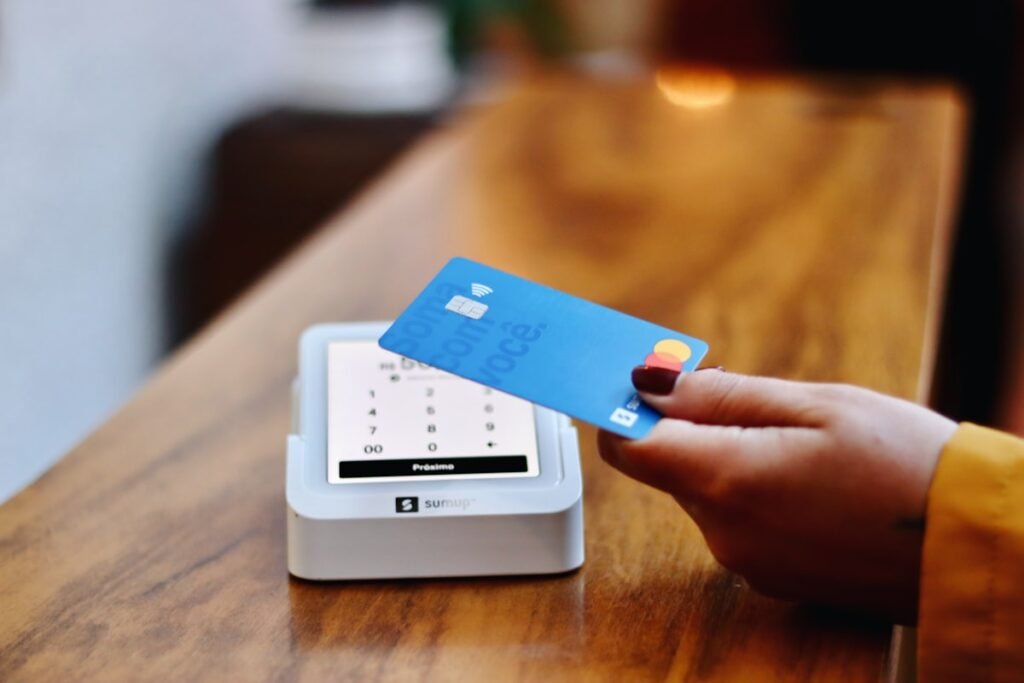
For gas stations, convenience stores, and liquor retailers across the tri-state region, credit- and debit-card “swipe” fees have quietly become one of the largest line items on the P&L. U.S. convenience stores paid roughly $21 billion in card fees in 2024, up more than 80% since 2020. For many operators, interchange is now the second-highest cost of doing business, behind only labor.
Why it matters: For a large share of convenience stores, the swipe fees they pay each year now exceed their pre-tax profit. Three separate bills, one federal, plus measures in New Jersey and Pennsylvania, are moving in 2026 to bring that cost down.
Federal: The Credit Card Competition Act is back, and endorsed by the White House
The bipartisan Credit Card Competition Act (CCCA) was reintroduced in early 2026 (S. 3623 / H.R. 7035) and, for the first time, carries a public endorsement from President Trump. New Jersey Rep. Jeff Van Drew is among the House co-sponsors.
The bill would require the largest banks (those with more than $100 billion in assets) to enable a second, competing network on each credit card. Banks would choose which networks to enable, but merchants would choose which one to route a transaction over, forcing the networks to compete on price, security, and service. Backers estimate roughly $17 billion a year in savings for merchants and consumers. NACS, the National Retail Federation, and RILA are all pushing for passage.
New Jersey: two bills targeting fees and surcharges
- A5008 / S2079, no swipe fees on sales tax or tips. These bills would bar card networks from charging interchange on the sales-tax and gratuity portion of a transaction, money the merchant merely collects for the state and never keeps. New Jerseyans paid an estimated $279 million in interchange on sales tax alone in 2024. Networks that violate the rule would face civil penalties of up to $1,000 per violation and be required to refund the overcharge. New Jersey would follow Illinois (2024) and Colorado (May 2026), which enacted similar laws.
- S595, surcharge ban. Introduced and referred to the Senate Commerce Committee in January 2026, this bill would move New Jersey from a state that allows card surcharging (capped at actual cost) to one that prohibits it outright. Nothing changes for merchants yet, the 2023 surcharge-disclosure rules still apply.
Pennsylvania: HB 2090 advances again
The Pennsylvania House Finance Committee has again advanced House Bill 2090, backed by the Pennsylvania Food Merchants Association (PFMA). Like New Jersey’s A5008, it would prohibit card networks from assessing interchange on the sales-tax portion of a purchase, and it reinforces a retailer’s right to lawful discounting and surcharging practices that network rules currently restrict. Enforcement would fall to the Pennsylvania Attorney General and would apply to payment-card networks only, not to local banks or credit unions.
What tri-state members should do
- Know your effective rate. Pull a recent statement and calculate fees as a percent of sales, it is the number these bills are designed to cut.
- Weigh a compliant cash-discount or surcharge program where your state allows it (rules differ across NJ, NY, and PA), and disclose it correctly at the pump and register.
- Make your voice heard. All three bills are live in 2026; AARA will continue tracking A5008/S2079, S595, HB 2090, and the federal CCCA and will alert members to hearings and votes.
Sources
- NACS. Credit Card Competition Act
- Payments Dive. Credit Card Competition bill wins Trump support
- New Jersey Legislature. Assembly Bill A5008 (interchange fees / sales tax)
- New Jersey Legislature. Senate Bill S2079
- Merchant Cost Consulting. New Jersey surcharge laws & S595
- Pennsylvania Food Merchants Association. PFMA praises swipe-fee relief (HB 2090)
- The Shelby Report. PFMA applauds PA House committee vote on swipe-fee relief bill