
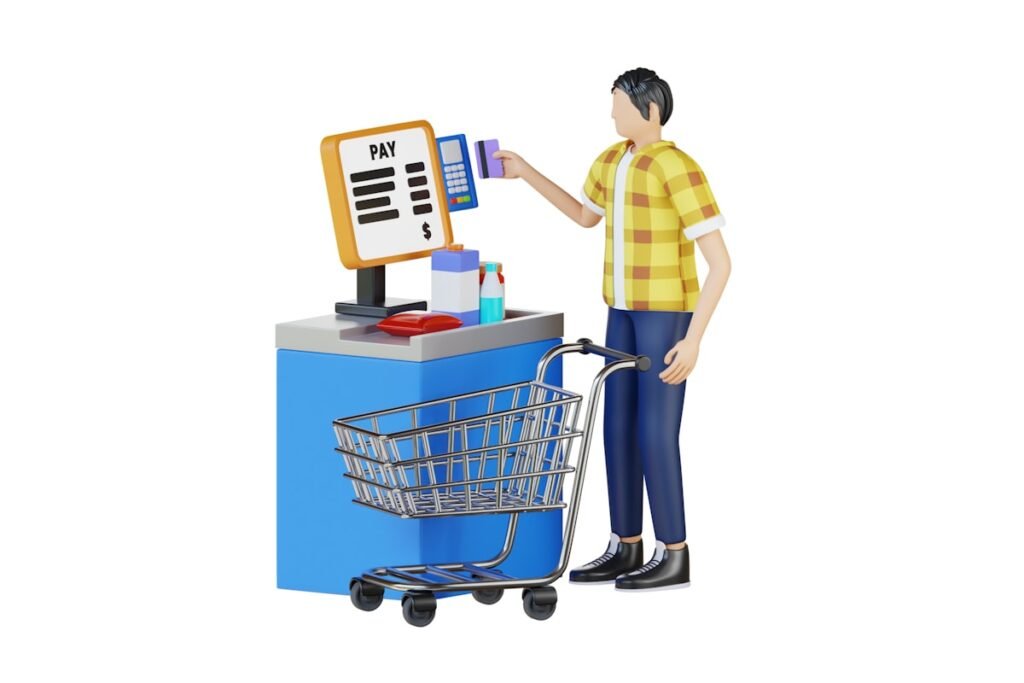
Self-checkout kiosks have become a fixture in New York City grocery and drugstore chains, but a bill before the City Council would put firm limits on how they operate. Introduction 0729 of 2026 would cap self-checkout transactions at 15 items and require stores to staff the kiosks with a minimum number of employees. Supporters frame it as a theft-prevention measure. Retailers see a new compliance cost. Either way, operators who have leaned on unattended self-checkout to control labor should pay attention.
What the Bill Requires
Introduced by Council Member Amanda Farias of the Bronx along with several co-sponsors, Int 0729-2026 would apply to grocery stores and pharmacies across all five boroughs. Two core requirements sit at the center of the bill:
- A maximum of 15 items per self-checkout transaction.
- At least one employee stationed nearby for every three self-checkout kiosks.
Stores that fail to comply would face a fine of $100 per day. If the bill passes, it would take effect one year after becoming law, giving retailers time to adjust staffing plans and reconfigure checkout areas.
The Theft Argument
The bill is driven largely by concern over retail theft at unattended kiosks. Sponsors point to survey data suggesting self-checkout makes shrink worse. A widely cited LendingTree survey found that more than one in four self-checkout users admitted to taking an item without paying for it, whether intentionally or by claiming an error. For city retailers already dealing with organized retail crime, the idea of a staffed kiosk with a strict item limit is meant to close an obvious gap.
The Retailer Concern
Store operators and some shoppers have pushed back. The staffing ratio, one worker per three machines, effectively erases much of the labor savings that justified installing self-checkout in the first place. A 15-item cap could also slow down lines during peak hours and frustrate customers who use self-checkout precisely because it is fast. Smaller grocery and convenience formats worry the rule treats a single kiosk the same as a bank of ten, without regard to store size or foot traffic.
New York City would not be alone. Lawmakers in several states have floated self-checkout limits over the past two years, and retailers nationwide are re-evaluating whether fully unattended checkout is worth the shrink. NYC’s version stands out for pairing an item cap with a specific staffing ratio and a daily fine.
What AARA Members Should Do
The bill is still in committee and has not become law, so nothing changes today. But members operating grocery or pharmacy formats in the city should model what a one-employee-per-three-kiosks rule would do to their labor schedule, and consider whether a 15-item limit fits their customer base. Convenience-format stores with a single self-checkout unit would need one attendant nearby during operating hours under the current text. AARA will follow Int 0729 through the committee process and flag any amendments to the item cap, the staffing ratio, or the list of covered businesses.